How We Consistently Close at 53% Close Rate (No Objection Handling)

How We Consistently Close at 53% Close Rate (No Objection Handling)

Written by

Avatar of author

Bendik Eide Anskau

I've built over 10 sales teams from scratch and closed well into 8 figures in collected revenue across high-ticket info, coaching, and service offers.

And the one thing that consistently takes teams from 10-15% close rates to 45-55% isn't what most people think.

It's not better objection handling. It's not fancy closing techniques you see all over Instagram.

It's a simple 4-step Discovery checklist that most sales teams completely skip over.

When I audit sales teams stuck below 20% close rate, bleeding money on ads, can't scale past $100k or $200k a month because the ROAS isn't high enough — almost every time, the problem is the same thing.

They're trying to fix and tweak the close when the real issue is what happened in Discovery.

Here's What I Mean

We took over a client who was doing 5 figures a month in revenue. Their close rate was sitting around 10-15% depending on the sales rep. We reviewed the call recordings and immediately saw what was wrong.

The reps were asking random questions, just "checking boxes" in their script, and then launching into a pitch that had zero connection to what the prospect actually said.

So the prospect would sit through the whole pitch, say "I need to think about it" at the end, and the whole team was complaining that "we need to get better at objection handling."

But that was not their problem.

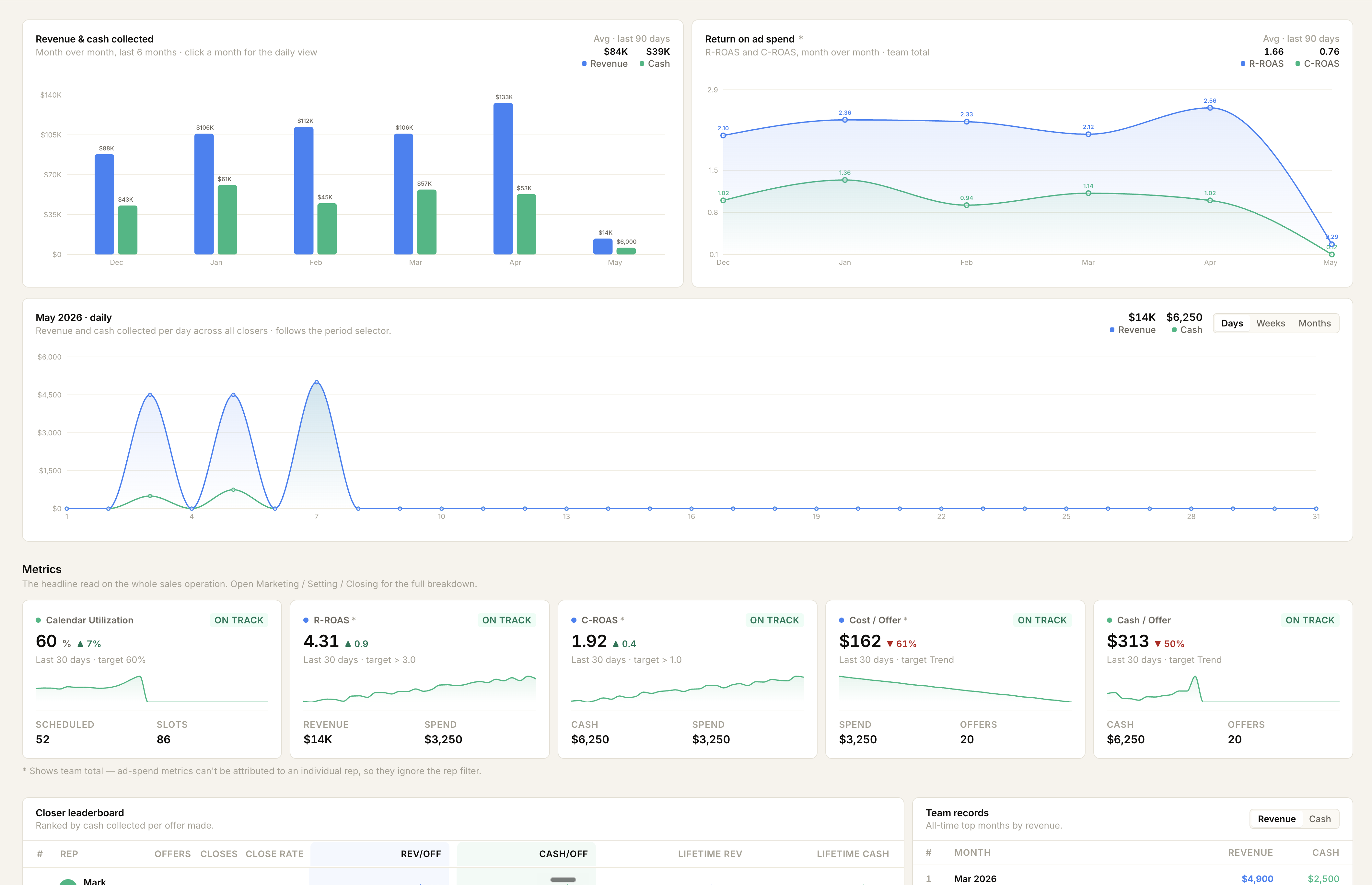
We rebuilt the team, implemented our 4-step Discovery framework, and within a year we hit a $340k month. Close rate stabilized between 45-55%, even though we raised prices twice during that period — at roughly a 50% increase from when we took over.

In this article I'll walk you through exactly what those four steps are, why they actually work, and how you can implement it with your team.

Now let me be clear: this isn't another "become a high-ticket closer" article. I'm not a coach selling you a sales training course.

I run Closing Consulting. We build, staff, and run entire sales operations for high-ticket info, coaching, and service businesses. Across all of our teams we've closed well into 8 figures in collected revenue.

I'm talking as the operator who sits on top of these teams and has to make them produce as an organization.

And what I keep seeing time and time again is: when close rates are stuck, the answer is almost never "better objection handling."

The answer is fixing what happens in Discovery.

Let me show you how we do it.

Why Discovery Is the Real Problem

Here's an analogy that explains this:

If you cook a meal and it turns out terrible, the issue probably wasn't what you did in the last 5 minutes. It wasn't the seasoning at the end.

It was how you prepped. What ingredients you started with. Whether you set yourself up to succeed before you ever turned on the pan.

Sales calls work the same way.

The last 10 minutes — the close — is just the final touch. But everyone's obsessed with it, thinking there's some "quick fix" to close more deals.

This is why all the curly haired sales gurus on Instagram teach you "how to deal with the spouse objection" - it's a quick fix promising easy money.

So people watch their recordings, skip to the objection, and think "If I just had a better response to 'I need to think about it,' I'd close more deals."

But that's not how sales works.

Because the prospect was never in a mental state where buying made sense. They weren't sold. They weren't even close.

What Actually Happens on a Bad Call

The rep asks a few surface questions — "What made you book a call today?" "What are you hoping to get out of this?" — gets some vague answers, nods along, and then can't wait to get into the pitch.

They're thinking: "I know this offer is amazing. If I can just show them how good it is, they'll buy."

So they rush through Discovery because it feels like a formality, like the thing you have to do before you get to the real stuff.

But Discovery is the real stuff. This is where the magic happens.

Discovery is where you earn the right to pitch.

If you pitch before Discovery is complete, you're trying to close someone who you don't actually know if they're the right fit for your offer. And you don't know what the impact of this solution will have on their life specifically.

It just doesn't make sense.

So what does this 4-step Discovery process look like?

The 4-Step Discovery Checklist

Here they are:

  1. A clearly defined & burning problem

  2. A real commitment to solving it now

  3. Admission they need help

  4. And a reason to want help from you specifically

That's it.

If you go through all four steps successfully, the pitch actually makes sense for the prospect. They are now in a mental state where buying is a logical next step.

If one or more is missing, you're pitching someone who isn't ready — and you'll get hit with objections that feel impossible to overcome.

Let me break each one down.

Step 1: Define a Real, Present-Tense Problem

Step 1 is to define a real, burning problem.

A problem is what's holding someone back from bridging the gap between where they are and where they want to be.

Now there are three components to defining the problem:

Current state — Where are you right now? Be specific.

Desired state — Where do you actually want to be? What does that look like specifically?

Consequences — What happens if nothing changes? What happens if you do fix it?

Example from a Real Estate Coaching Offer:

Currently: "I own zero properties. I've been trying to find deals for six months and haven't pulled the trigger on anything."

Desired: "I want to build a portfolio worth $5 million with about $15k per month in net cashflow so I can quit my job, go all in on real estate, and actually be present with my kids."

The Negative Consequences: "If I don't figure this out, I'm stuck in a job I hate, missing my kids grow up, and ten years from now I'll look back and regret that I never took action."

The Positive Consequences: "If I do this, I buy my freedom. I get my time back. I build something real that's going to take care of us for years to come."

So now we can name the actual problem:

There's a gap in your knowledge or skillset that's keeping you from finding and executing on the investments that would get you to your goals. This is why you haven't made any meaningful progress in the last six months.

That's a defined problem.

But here's what's even more important — it's a problem that's completely within their control.

They can't keep blaming the market or other external factors. If they want to reach their goal, they have to take ownership of what's actually in the way.

And once they do that, they're empowered to fix it.

Step 2: Get Real Commitment

Step 2 is to get a real commitment to solving this problem now.

Not "it would be nice" — but an actual commitment.

Here's a simple way to do this:

"On a scale of 1 to 10, how serious are you about actually fixing this in the next 6 to 12 months?"

If they say "6" and start talking about "after the summer" or "when things calm down" — that's not commitment. That's daydreaming.

There's zero point spending 20-30 minutes pitching to someone who isn't serious about changing anything.

First they won't listen as attentively, then they'll say "sounds great, let me think about it" — not because your close was weak, but because they were never going to buy today anyway.

The rep needs a clear, verbal commitment that this is a real problem, they want it solved, and now is the right time. And this is important, not because the rep needs to check the box, but because the prospect needs to make a decision that they are ready to solve the problem before we can start looking at a solution.

If they can't get that, they should not be pitching.

Step 3: Get Them to Admit They Need Help

Once you have defined the problem and gotten a commitment that they want to do something about it now, then step 3 is to get them to admit they need help.

This is the step most teams don't even realize they're missing.

You can have a prospect with a clear problem and real commitment — but if they think they can solve it on their own, they're not going to pay you thousands of dollars.

And most prospects, when they're stuck, don't blame themselves.

They blame the market, timing, the economy, the platform they've been using — literally anything except themselves.

If they don't believe they are part of the reason they're stuck, they will not believe they need help.

The rep's job is to guide them — gently — to realize: "Okay, there's something in how I've been thinking about this that isn't working. I haven't been able to figure this out on my own."

You don't achieve that by arguing with them. You use questions and labels.

Here's an Example We See Constantly:

Prospect: "My only problem is I just can't find good real estate deals. The market is too competitive right now."

Closer: "So the only thing holding you back from building the portfolio you want is that you've been looking for a few months and haven't found the perfect deal. That's it?"

You're not arguing. You're feeding their logic back to them.

Then:

"Do you think there are people — in your exact market, looking at the same platforms — who have found great deals in the last few months?"

"So two people look at the same market. You haven't found anything, they have. What do you think explains that difference?"

You're not making them feel stupid. You're leading them to see for themselves:

"Yeah, there's something I don't know or I'm not doing right."

That's the moment where "I want this" becomes "I probably need help with this."

Until they get there, they're looking for information, not looking to make a decision.

Step 4: Establish 'Why Us?'

And the last step: Why should they want your help specifically?

If the prospect has no idea who you are, hasn't seen your content, your proof, your results, doesn't see any difference between you and 10 other options — then you're just another sales rep making a pitch. And they're going to go shopping to compare offers.

You need them thinking, before you pitch: "If I'm going to do this, I want to do it with these people."

So the rep should ask:

"What made you book a call with us specifically?"

"What have you seen or heard about us so far?"

"Based on that, why did you think we might be able to help?"

If the answer is "I don't know, I just clicked an ad" — that's fine, but now before you can transition to the pitch, you need to establish credibility. Show them what you actually do, who you've helped, what results you've created.

So by the time you pitch, it's not "here's some random offer." It's "here's how we — the people you now trust — can solve the specific problem you told me about."

When All Four Are Done Right:

✓ You have a clearly defined, burning problem with real consequences
✓ A real commitment to solving it now
✓ Admission they need help
✓ And a reason to want that help from you

…now the pitch makes sense.

The close becomes easy because the setup was done right.

How to Actually Install This in Your Team

Okay, so you've got the framework. Here's how we actually get reps using it.

First: Make It Physical

We have the reps keep a notebook for every call. At the top, they write:

DISCOVERY | PITCH | CLOSE

Under Discovery, they write:

  1. Problem

  2. Commitment

  3. Need Help

  4. Why Us

As they run the call, they put a checkmark next to each one when they genuinely have it.

They do not move into Pitch until all four are checked.

Stupid simple. Incredibly effective.

It forces them to slow down and actually do Discovery instead of getting excited and rushing into the pitch.

Second: Review Calls Through This Lens

When I or a manager listens to recordings, we're listening specifically for:

  • Did they define a real problem, or did they accept a vague wish?

  • Did they get clear commitment, or did they tiptoe around it?

  • Did the prospect ever admit they need help, or did the rep assume they do?

  • Did they establish "why us," or did they pitch to someone who has no trust in us?

You'll see patterns instantly when you review calls this way.

Most low close rates come back to this: reps pitching when they only have one or two of the four in place.

The "objections" at the end? They're downstream symptoms of a broken Discovery process.

Fix this, and a surprising number of those objections disappear entirely.

Who This Is For

Look, I've personally coached over a hundred closers on this exact framework. And here's what happens when you run Discovery this way:

You don't need high-pressure tactics. The prospect genuinely feels like they're making their own decision — because they are.

And what that does is it lets us close more deals, produce more revenue for clients, and every single person who gets on a call leaves thinking "That was actually a really nice company" — whether they bought or not.

That's the difference between building a sales operation that scales and one that burns out.

Get Started

Get Started

Get Started

Get Started

Get Started

Stop Loosing Deals To a Leaky sales operation

Book a call with our founder to explore whether your offer qualifies for full integration. No fluff. No pitch. Just a deep dive into your numbers, funnel, and sales process.

Evaluate your sales process

Identify obstacles to scaling your business

Devise a strategy based on your goals

Get Started

Get Started

Get Started

Get Started

Get Started

Stop Loosing Deals To a Leaky sales operation

Book a call with our founder to explore whether your offer qualifies for full integration. No fluff. No pitch. Just a deep dive into your numbers, funnel, and sales process.

Evaluate your sales process

Identify obstacles to scaling your business

Devise a strategy based on your goals

Testimonials

Testimonials

Testimonials

Testimonials

Testimonials

Hear From Some Of Our Clients

Here’s what happens when top-tier creators and info businesses hand us the keys to their sales.

Testimonials

Testimonials

Testimonials

Testimonials

Testimonials

Hear From Some Of Our Clients

Here’s what happens when top-tier creators and info businesses hand us the keys to their sales.

Testimonials

Testimonials

Testimonials

Testimonials

Testimonials

Hear From Some Of Our Clients

Here’s what happens when top-tier creators and info businesses hand us the keys to their sales.

© 2026 Closing Consulting. All rights reserved.